
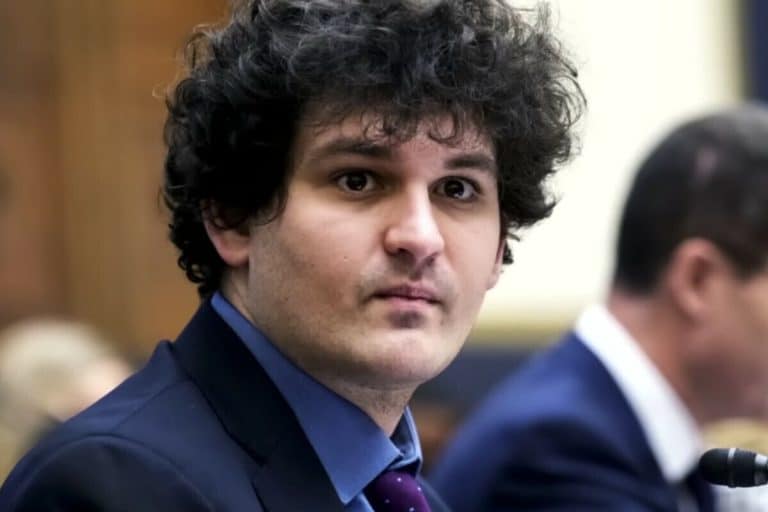
FTX Founder Sam Bankman-Fried Appeals Fraud Conviction Before Supreme Court


Sam Bankman-Fried requested that the U.S. Supreme Court on Thursday overturn his fraud conviction arising from FTX’s collapse, shortly after high-profile pardons were issued to Silk Road founder Ross Ulbricht and Binance co-founder CZ.
Bankman-Fried is serving a 25-year sentence after his 2023 conviction, while his legal team is also contesting a forfeiture of roughly $11 billion.
The justices first must determine whether to accept the case. The court receives thousands of similar petitions annually and hears arguments in approximately 60 cases.
What Is Sam Bankman-Fried’s Petition Contesting?
The petition contests central elements of Bankman-Fried’s case, including both his conviction and the forfeiture order.
– The conviction: His attorneys contend that the trial judge wrongly barred evidence concerning whether FTX customers ultimately recovered their funds.
– The forfeiture order: The defense maintains that the approximately $11 billion penalty is excessive under the Eighth Amendment.
– A separate pardon request: Records from the Office of the Pardon Attorney show that Bankman-Fried’s application for a pardon from President Trump is pending.
Bankman-Fried was found guilty on seven fraud and conspiracy counts after a month-long federal jury trial. In June, a three-judge panel of the U.S. Court of Appeals for the Second Circuit upheld the judgment.
The appeals court characterized the case as involving FTX and Alameda Research, the cryptocurrency trading company operated and controlled by Bankman-Fried.

Earn $50 and Enter EdgeX’s $300K Prize Draw
What Are SBF’s Lawyers Arguing?
His attorneys have said that FTX and Alameda possessed enough assets to repay customers and that restrictions placed on evidence about those assets denied him a fair trial. The petition cites FTX’s bankruptcy plan, under which nearly all creditors were promised cash repayments, including interest, to recoup their losses.
Federal prosecutors have argued that FTX customers were defrauded through Bankman-Fried’s management of their money, including the diversion of billions of dollars in customer funds. According to the Second Circuit, the government’s theory at trial was that Bankman-Fried assured customers their funds would be protected on the platform and used solely for cryptocurrency transactions, but instead moved those funds to Alameda and other destinations for unauthorized purposes. The court upheld the district court’s ruling.
Take Advantage of ByBit’s $1,000 USDT Airdrop
Sam Bankman-Fried’s Journey from Billionaire to Defendant
Bankman-Fried established FTX in 2019 and built it into one of the world’s largest cryptocurrency exchanges. The company’s expansion generated substantial wealth and public visibility for him, making him one of the youngest billionaires in the world and a leading Democratic donor.
FTX collapsed in 2022 after a wave of deposit withdrawals pushed the company into bankruptcy. Bankman-Fried was arrested later that year in the Bahamas, where he had been living, and extradited to the United States to stand trial. The Second Circuit’s account states that FTX sought bankruptcy protection in November 2022 after it was unable to satisfy customer withdrawal requests.
Bankman-Fried has continued to deny wrongdoing. Prosecutors described the case as among the largest financial frauds ever prosecuted and alleged that he stole billions from FTX customers while portraying himself as a responsible philanthropist.
What Happens Next
The Supreme Court has not said whether it will consider Bankman-Fried’s petition. Its choice to hear or reject the case will determine whether his challenge receives further review.
His pending pardon application is separate from the Supreme Court petition. The Office of the Pardon Attorney, a Justice Department division, lists the request as one seeking a pardon after completion of his sentence and marks it as pending.