


Ahmed Balaha is a journalist and copywriter based in Georgia with a growing focus on blockchain technology, DeFi, AI, privacy, digital assets, and fintech innovation.


Bitcoin Society, the investment vehicle backed by former NBA star Tony Parker and entrepreneur Éric Larchevêque, has halted its Bitcoin treasury accumulation program after BTC dropped more than 20% in Q1 2026, with Larchevêque citing market conditions that had turned structurally unfavorable for raising capital to buy BTC reserves.


The decision marks a direct departure from the MicroStrategy accumulation model, aggressive balance-sheet Bitcoin loading regardless of price, that Bitcoin Society had been following since entering the market in late 2024.
The pause is described as a strategic hold rather than a liquidation of existing holdings, but the distinction matters less than what the decision signals: a high-profile corporate adopter has decided the current BTC price environment does not justify the capital-raising mechanics the treasury model depends on.

Whether that is a one-firm reassessment or an early indicator of broader corporate treasury cooling is the question the market now has to answer.
The Treasury Arbitrage That Powered the Model Has Eroded, and Bitcoin Society’s Pause Reflects That
The MicroStrategy model worked because of a specific structural arbitrage: companies could raise capital at elevated equity valuations, then deploy those proceeds into Bitcoin trading at a price below what treasury advocates argued was its intrinsic asset value.

That premium-to-NAV gap created a flywheel; higher stock multiples meant a cheaper cost of capital, which meant more BTC per dollar raised, which supported the equity premium further. The mechanism was self-reinforcing until it wasn’t.
By late 2025, MicroStrategy’s own stock had declined 51% year-over-year, and the company was compelled to raise $1.44 billion in additional liquidity to address debt-service concerns in what analysts called a low-premium environment.
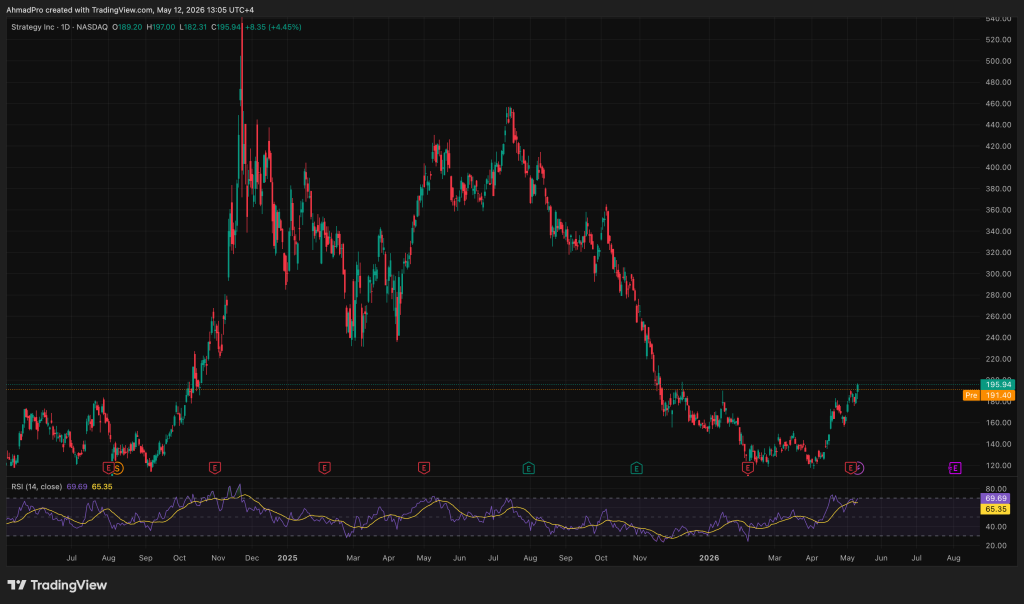
The arbitrage advantage that made the treasury model compelling had evaporated.
Standard Chartered’s analysis estimated that with Bitcoin trading below $90,000, approximately 50% of Bitcoin treasury companies would face viability challenges, a threshold Bitcoin Society Q1 2026 decision appears to have been stress-tested against.
Larchevêque’s explanation was precise: “Market conditions have turned against the objective of raising capital to accumulate Bitcoin reserves.”
That framing is not a rejection of Bitcoin as an asset. It is a rejection of the financing mechanism, and that distinction is analytically important.
The Bitcoin treasury thesis and the treasury company financing model are not the same thing, and Bitcoin Society pause reflects a failure of the latter, not necessarily a conviction change on the former.
The pause is not accompanied by publicly stated conditions for resumption, which leaves the program’s future contingent on whether equity market conditions recover enough to make the capital-raise economics viable again.
- Elon Musk New Grok AI Predicts the Price of XRP by The End of 2026
- Sam Altman ChatGPT AI Predicts the Price of XRP By the End of 2026
- Tom Lee Floats $22,000 Ethereum Target: What Has to Be True?
- XRP News: Institutional Adoption Accelerates, Network Activity At Lowest
- Clarity Act News: Scaramucci 3-Year Regulatory Delay Warning