
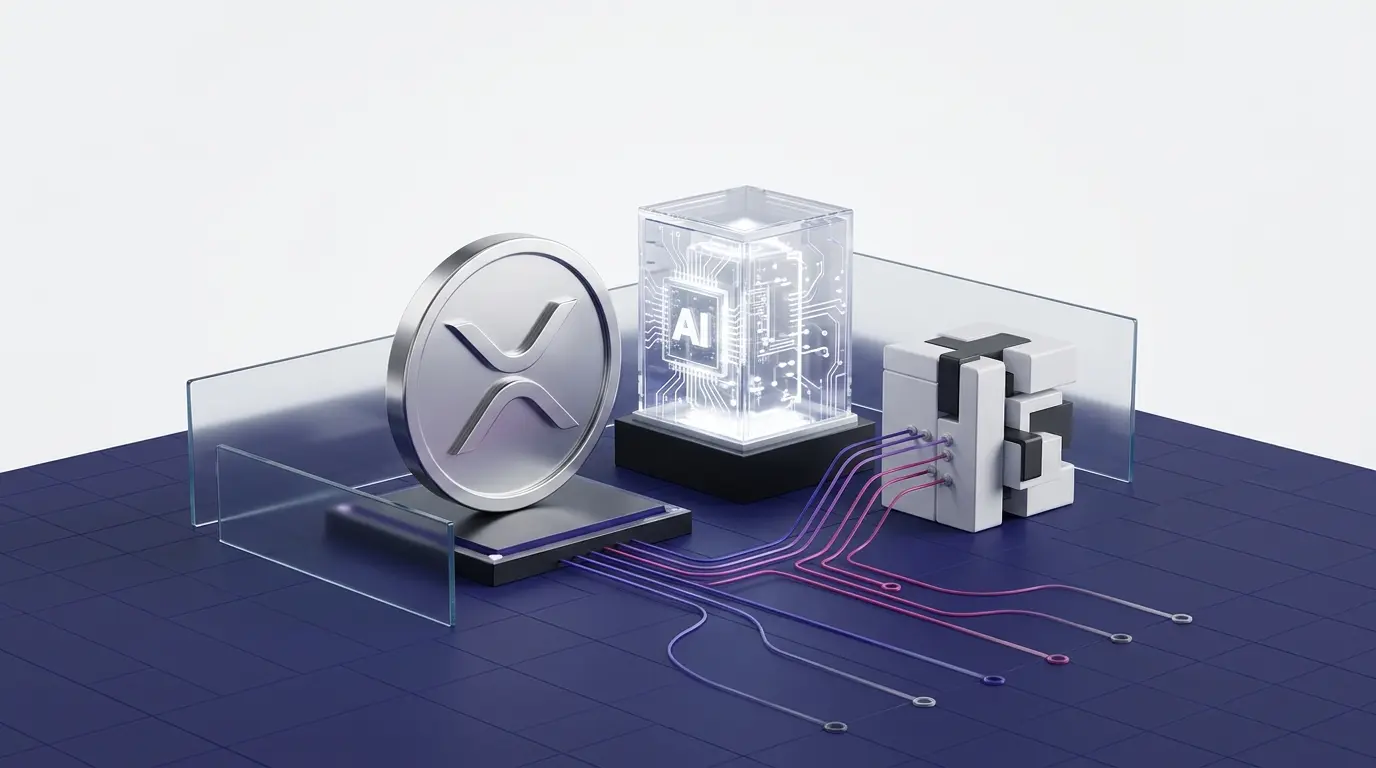
Ripple Updates XRPL AI Starter Kit to Version 1.1, Incorporating Machine Payments Protocol Support


Ripple has announced an update to its XRPL AI Starter Kit, advancing it to version 1.1 with the addition of the Machine Payments Protocol (MPP), a standard co-developed by Stripe and Tempo that enables software agents to pay for services without a traditional checkout process. The update also introduces Open Wallet Standard support, providing developers with a unified interface for managing wallets across various blockchains.


Developers can now create AI agents capable of paying for data, computing power, and other online services using XRP or RLUSD, Ripple’s dollar-pegged stablecoin. This development is more structurally significant than commercially impactful at this stage. The software remains in beta, and Ripple’s announcement does not identify any commercial customers utilizing the new MPP integration nor disclose any payment volume associated with it.
This move represents Ripple proactively building payment infrastructure ahead of proven demand.
MPP operates on a straightforward loop: a service responds to an agent’s request with a price, the agent authorizes payment, and the service delivers the requested resource. No human intervention approves a checkout screen; the transaction is simply another step in the agent’s workflow.
XRP Ledger is now a supported in the Open WalletStandard, and a settlement option in @tempo and @stripe’s Machine Payments Protocol via the new XRPL AI Starter Kit.Payments stream over native Payment Channels and settle in one transaction.Deterministic finality. Predictable… pic.twitter.com/DvH50u5gHH
— XRP Ledger Foundation (@XRPLF) September 16, 2026
Ripple is not committing to a single standard. It previously added support for x402, a separate web-payment protocol, in June, and MPP now complements it rather than replacing it. This approach serves as a hedge rather than a bet on a winner, reflecting an environment where the agentic-payments space has not yet settled on a dominant rail.
The same reasoning explains why AI systems are increasingly employed to evaluate XRP’s prospects: utility narratives now compete directly with speculative ones for the token’s valuation case.
Earn $50 and Enter $300K Prize Draw on EdgeX
How the Payment Mechanics Function?
A business already leveraging Stripe and Tempo’s open protocol can now offer XRP or RLUSD payments through Ripple’s integration without restructuring around a new blockchain. One-time payments support both XRP and issued tokens like RLUSD from the outset.

Ongoing payment sessions are more restricted: they currently require XRP specifically. The intended use case involves an agent depositing XRP once, executing hundreds of paid queries, and authorizing incremental spending after each response, with the provider collecting the accumulated total without recording every individual query on-chain.
Extending this session model to stablecoins hinges on a proposed ledger upgrade that has not yet been deployed, so RLUSD-denominated payment channels are not live.
The Open Wallet Standard component addresses a separate challenge: key management across chains. It allows agents to request transactions without directly accessing private keys, with safeguards such as spending limits and approved destinations built into the interface.
Trade XRP on Bybit and Get a Chance to Win Our $1,000 USDT Airdrop
Ripple’s Strategic Positioning and Outstanding Gaps
Supporting both x402 and MPP provides developers a pathway onto the XRP Ledger regardless of which payment standard they adopted first. This is the true strategic value beyond the announcement: Ripple is embedding XRP and RLUSD into applications whose developers selected their payment protocol before choosing a blockchain, rather than attempting to persuade them to adopt XRPL-specific tooling from scratch.
Agentic payments will be multi-platform and multi-rail. Our job is to make XRP and RLUSD first-class options wherever developers are building.The latest XRPL AI Starter Kit expands support for the open standards developers are converging on: Open Wallet Standard, MPP from Tempo…
— Jazzi Cooper (@jazzicoop) September 16, 2026
So, what remains absent? The kit is still beta software. No named commercial customer is using the MPP integration, and Ripple has released no payment-volume data to demonstrate actual usage.
The near-term catalyst to monitor is not this release itself, but whether the proposed ledger upgrade enabling stablecoin payment sessions materializes, and whether any developer building on MPP or x402 reveals real transaction flow through XRPL. Until then, this represents Ripple securing optionality in an undecided standards race, not confirmation that agents are transacting in XRP at any meaningful scale.